The Feline Innovators of Literary Arts: Cats and Their Enigmatic Influence on Storytelling
- One Comment
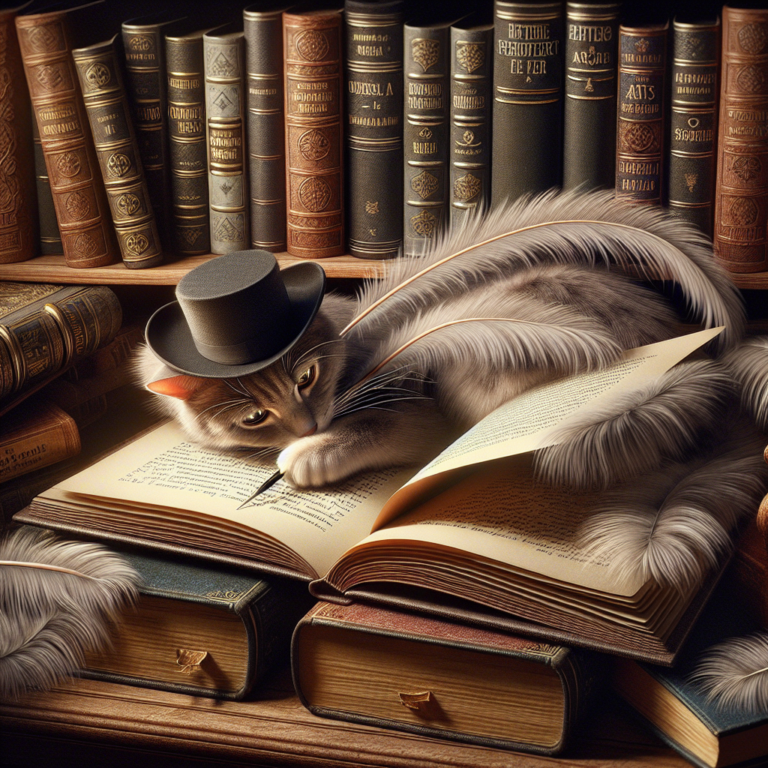
In the realm of literary arts, cats have quietly purred their way into the hearts and minds of writers throughout history. Their presence in literature, though often understated, has been a source of inspiration, companionship, and even a muse for some of the most prolific authors. The allure of cats, with their graceful movements and enigmatic personalities, has led them to become central characters in novels, poetry, and folklore across cultures.
From the ancient tales of Egypt where cats were revered as sacred beings, to the whimsical adventures in Lewis Carroll’s “Alice’s Adventures in Wonderland,” cats have been portrayed as both mystical and mischievous. The Cheshire Cat, with its iconic grin, exemplifies the mysterious nature of felines, offering riddles and wisdom that challenge the protagonist’s perception of reality. Similarly, T.S. Eliot’s “Old Possum’s Book of Practical Cats” paints a vivid picture of feline personalities, each character imbued with unique traits that echo those of humans, adding depth and humor to the narrative.
In modern literature, cats continue to captivate readers and writers alike. Haruki Murakami, a contemporary author known for his surreal storytelling, often incorporates cats as significant symbols within his novels. In works such as “Kafka on the Shore,” cats are not merely pets but spiritual companions, guiding characters through complex emotional landscapes. This reflects a broader cultural fascination with cats as creatures that straddle the line between the mundane and the magical.
Moreover, the influence of cats extends beyond fiction into the realm of poetry. Poets have long been enthralled by the elegance and mystery encapsulated in the feline form. Their silent, observant nature often serves as a metaphor for introspection and the unspoken complexities of life. Rainer Maria Rilke’s poetry, for instance, captures the essence of a cat’s quiet power and independence, using it as a lens through which to explore human emotions.
The role of cats in storytelling is not limited to their depiction as characters. Many writers find solace in the company of a cat during the creative process. The presence of a purring cat is said to provide comfort and inspiration, creating an atmosphere conducive to creativity. The late Doris Lessing, a Nobel Prize-winning author, was known for her deep affection for cats and often spoke of their calming influence while she wrote.
As the digital age continues to reshape the literary landscape, cats have carved out a niche in online storytelling as well. Platforms like Instagram and Twitter have become canvases for cat stories, where short narratives and visual snippets capture the daily lives of these beloved animals, further solidifying their place in the canon of contemporary storytelling.
In conclusion, the subtle yet profound influence of cats on literary arts is a testament to their enduring charm and complexity. They are more than mere companions or characters; they are muses that inspire creativity, challenge perceptions, and connect readers and writers across time and space. As long as there are stories to be told, cats will continue to weave their enigmatic presence into the fabric of literature, enchanting and inspiring generations to come.




In the realm of literary arts, cats have quietly purred their way into the hearts and minds of writers throughout history. Their presence in literature, though often understated, has been a source of inspiration, companionship, and even a muse for some of the most prolific authors. The allure of cats, with their graceful movements and enigmatic personalities, has led them to become central characters in novels, poetry, and folklore across cultures.
From the ancient tales of Egypt where cats were revered as sacred beings, to the whimsical adventures in Lewis Carroll’s “Alice’s Adventures in Wonderland,” cats have been portrayed as both mystical and mischievous. The Cheshire Cat, with its iconic grin, exemplifies the mysterious nature of felines, offering riddles and wisdom that challenge the protagonist’s perception of reality. Similarly, T.S. Eliot’s “Old Possum’s Book of Practical Cats” paints a vivid picture of feline personalities, each character imbued with unique traits that echo those of humans, adding depth and humor to the narrative.
In modern literature, cats continue to captivate readers and writers alike. Haruki Murakami, a contemporary author known for his surreal storytelling, often incorporates cats as significant symbols within his novels. In works such as “Kafka on the Shore,” cats are not merely pets but spiritual companions, guiding characters through complex emotional landscapes. This reflects a broader cultural fascination with cats as creatures that straddle the line between the mundane and the magical.
Moreover, the influence of cats extends beyond fiction into the realm of poetry. Poets have long been enthralled by the elegance and mystery encapsulated in the feline form. Their silent, observant nature often serves as a metaphor for introspection and the unspoken complexities of life. Rainer Maria Rilke’s poetry, for instance, captures the essence of a cat’s quiet power and independence, using it as a lens through which to explore human emotions.
The role of cats in storytelling is not limited to their depiction as characters. Many writers find solace in the company of a cat during the creative process. The presence of a purring cat is said to provide comfort and inspiration, creating an atmosphere conducive to creativity. The late Doris Lessing, a Nobel Prize-winning author, was known for her deep affection for cats and often spoke of their calming influence while she wrote.
As the digital age continues to reshape the literary landscape, cats have carved out a niche in online storytelling as well. Platforms like Instagram and Twitter have become canvases for cat stories, where short narratives and visual snippets capture the daily lives of these beloved animals, further solidifying their place in the canon of contemporary storytelling.
In conclusion, the subtle yet profound influence of cats on literary arts is a testament to their enduring charm and complexity. They are more than mere companions or characters; they are muses that inspire creativity, challenge perceptions, and connect readers and writers across time and space. As long as there are stories to be told, cats will continue to weave their enigmatic presence into the fabric of literature, enchanting and inspiring generations to come.

1 thought on “The Feline Innovators of Literary Arts: Cats and Their Enigmatic Influence on Storytelling”
What a delightful exploration of how these graceful creatures have inspired and enriched literary creativity!